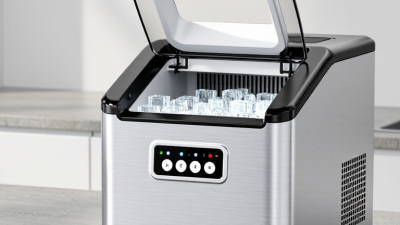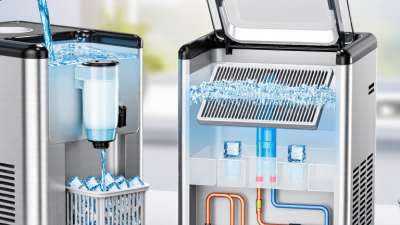
Choosing the right ice machine can change how smoothly a kitchen, office, café, or small shop operates. A reliable Countertop Ice Maker should produce consistent ice, fit limited space, and remain simple to clean. It also needs to match your daily demand, not just look attractive in product photos.
This guide examines ten leading countertop models for home and business use. We consider ice-making speed, batch size, noise, water-reservoir design, energy use, and cleaning access. Clear control panels matter when staff are busy. A compact unit may serve a family well, while a busy beverage counter may need faster production and a larger storage basket. Small details matter. Meltwater handling can also affect convenience, especially during long afternoons.
Real-world performance is rarely perfect. Some machines produce ice quickly but operate loudly. Others create attractive bullet-shaped ice but require frequent refilling. Product specifications can also vary by room temperature, ventilation, and water quality. That is why this comparison looks beyond impressive numbers. It focuses on practical ownership, maintenance, warranty information, and user feedback from everyday settings. I may favor efficiency in one situation, but that choice will not suit everyone. Your priorities deserve careful thought. Whether you need chilled drinks at home or dependable support during a busy service period, these recommendations aim to make the decision clearer, more informed, and more realistic.
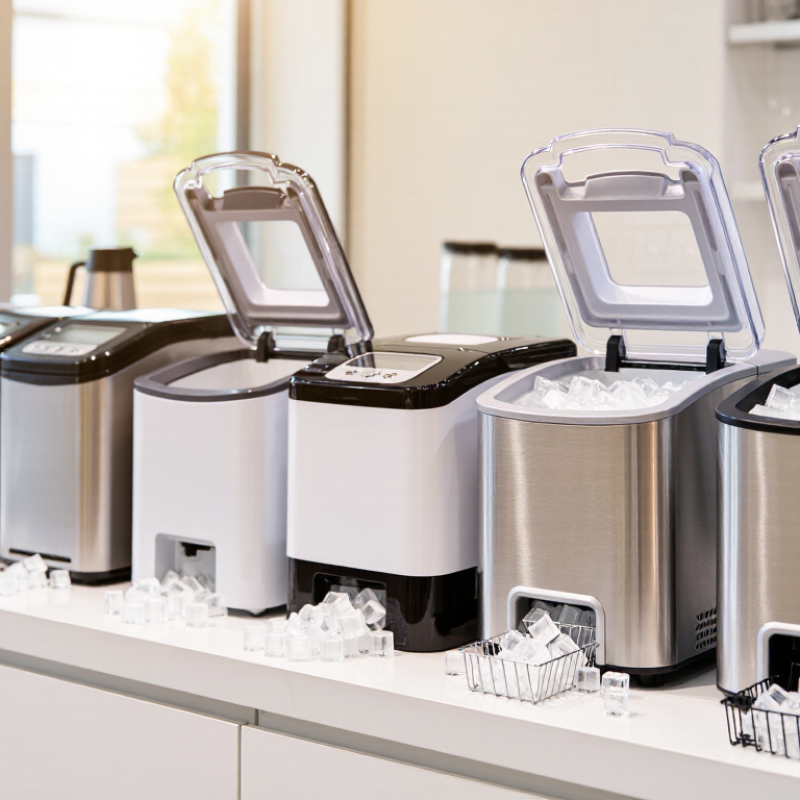
A countertop ice maker is best understood as a small batch machine, not a miniature commercial plant. Most models claim 20–50 pounds of ice daily, with cycles lasting about 6–15 minutes. Those figures come from controlled conditions, however. The U.S. Department of Energy test method evaluates production over 24 hours, using defined water and room temperatures. Your kitchen may be warmer, louder, and less predictable.
The first basket may fill quickly. Then output can slow. Warm water, poor ventilation, and frequent lid opening all reduce production. ASHRAE’s 2023 Handbook explains that refrigeration capacity changes with ambient temperature and condenser airflow.
A practical check is simple: record actual output for three hours, not one impressive cycle. Small differences matter. A 20-pound rating may deliver far less during a busy gathering.
Energy use also deserves attention. ENERGY STAR commercial ice-machine specifications measure electricity in kilowatt-hours per 100 pounds and water in gallons per 100 pounds. Countertop units are often outside that commercial category, so direct comparisons can be imperfect.
Look for clear wattage, reservoir capacity, ventilation space, and basket size. The FDA Food Code 2022 emphasizes cleanable food-contact surfaces and safe ice handling.
Empty melted water promptly. Sanitize the bin regularly. I would not treat a 50-pound claim as guaranteed daily supply. It is a ceiling, not a promise.
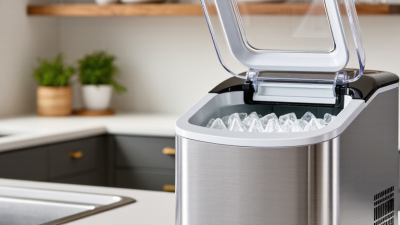
When choosing countertop ice makers, safety starts with the water, not the freezing speed.
The 2022 FDA Food Code states that ice must come from an approved water source. It also requires ice-contact surfaces to be clean, smooth, and resistant to corrosion. That matters because small scratches can trap residue near the chute or storage bin.
Look for equipment evaluated against NSF/ANSI 12, the sanitation standard for automatic commercial ice-making equipment. The standard addresses materials, construction, cleanability, and protection against contamination.
Food-contact parts should use suitable materials, such as certified stainless steel or approved polymers. Avoid vague claims like “food safe” without supporting documentation. Ask for certification details.
The risk is not theoretical. The WHO and UNICEF Joint Monitoring Programme reported that 2.2 billion people lacked safely managed drinking water in 2022. Home users still need disciplined maintenance. Use potable water, keep the lid closed, and wash removable parts as directed. Ice is food.
Small oversights matter.
In business settings, record cleaning dates and inspect seals, drains, and water lines. A machine can produce clear ice while harboring buildup inside hidden channels. That is an uncomfortable point.
Visual cleanliness is not proof of sanitation. Certification also does not replace routine cleaning, correct installation, or local health-code compliance.
Choosing among the 10 best countertop ice makers requires more than checking production speed. Ice type affects drinks, storage, and customer expectations. Bullet-shaped ice melts quickly and suits casual beverages. Nugget-style ice feels softer and is popular for chewing. Clear cubes usually melt more slowly, but they may require longer freezing cycles.
Bin capacity deserves close attention. A one-pound bin works for a small kitchen and occasional use. Two or three pounds provide better support for meetings, cafés, or busy service periods. However, the bin usually stores ice rather than freezing it continuously. I once underestimated this detail, and the melting water surprised me.
Noise becomes obvious in quiet rooms. Compare decibel ratings, but also listen for compressor vibration and fan pulses. Energy use depends on insulation, room temperature, and cleaning habits. A dirty filter can reduce airflow and waste electricity. Cleaning should be simple, with removable baskets, smooth surfaces, and accessible water reservoirs. Use the cleaning cycle regularly, then dry the interior fully. Small gaps can hide residue. My evaluation would also include several days of real use, because laboratory claims may not reflect a crowded counter, warm water, or repeated opening.
Typical countertop models produce approximately 20–35 lb of ice per day, store about 1–3 lb in the internal bin, operate near 40–50 dBA, use roughly 100–200 watts while running, and require regular draining and descaling. The scores below translate these practical specifications into a 10-point suitability scale for home and business use.
For homes, offices, and small businesses, the best countertop ice makers balance output, footprint, noise, and cleaning effort. Grand View Research estimated the global ice maker market at about USD 5.2 billion in 2023, with steady growth expected through 2030. That expansion reflects more demand for convenient ice in kitchens, break rooms, cafés, and compact service areas.
A practical countertop unit should produce its first batch within 10 minutes and store roughly 1.5 to 2 pounds of ice. Check the daily production rating, but do not treat it as guaranteed output. Warm rooms, poor ventilation, and frequent lid opening can reduce performance. Choose clear controls, a removable basket, and a drain plug near a sink. Small offices may value quiet operation more than maximum capacity. Busy cafés need faster recovery between batches. The difference is noticeable.
Energy use also deserves attention. The U.S. Department of Energy reports that cooling equipment efficiency depends heavily on operating conditions and maintenance. Keep several inches around the vents, wipe the condenser area, and empty standing water daily. NSF guidance for food equipment emphasizes cleanable surfaces and hygienic water handling, although certification details vary by model. A 2024 market analysis from Grand View Research also notes rising interest in compact, portable ice equipment. That trend sounds convenient, but published forecasts differ by research method. Verify production claims against independent testing when possible. I would not choose glossy design over an accessible drain.
| Rank | Countertop Ice Maker Profile | Best For | Ice Style | Daily Ice Output | First Batch Time | Storage Capacity | Water Reservoir | Approx. Dimensions | Operating Noise | Power Draw | Key Practical Feature | User Rating |
|---|---|---|---|---|---|---|---|---|---|---|---|---|
| 1 | Compact Bullet-Ice Maker | Apartments and small kitchens | Hollow bullet ice | 26 lb / 24 hours | 6–8 minutes | 1.5 lb basket | 2.0 L | 12.0 × 9.0 × 13.0 in | About 43 dB | 120 W | Small footprint, removable basket, automatic full-basket alert | ★★★★★ |
| 2 | High-Output Bullet-Ice Maker | Busy households and home entertaining | Hollow bullet ice | 35 lb / 24 hours | 7–9 minutes | 2.0 lb basket | 2.2 L | 13.0 × 9.5 × 14.0 in | About 45 dB | 145 W | Faster production with a larger water tank and wide viewing window | ★★★★★ |
| 3 | Self-Cleaning Portable Ice Maker | Homes and offices requiring easy maintenance | Small or large bullet ice | 26 lb / 24 hours | 6–8 minutes | 1.5 lb basket | 2.2 L | 12.5 × 9.5 × 13.0 in | About 44 dB | 120 W | Automatic cleaning cycle, drain plug, and size selection | ★★★★☆ |
| 4 | Large-Reservoir Countertop Maker | Offices and shared break rooms | Hollow bullet ice | 33 lb / 24 hours | 8–10 minutes | 2.4 lb basket | 3.0 L | 14.0 × 10.0 × 14.5 in | About 46 dB | 150 W | Reduced refill frequency and visible water-level indicator | ★★★★☆ |
| 5 | Clear-Cube Compact Maker | Cocktails and premium home beverages | Small clear cubes | 22 lb / 24 hours | 8–10 minutes | 1.8 lb basket | 2.0 L | 13.5 × 10.0 × 14.0 in | About 47 dB | 160 W | Harder, slower-melting ice with a front control panel | ★★★★☆ |
| 6 | Chewable Nugget-Ice Maker | Families and soft-ice enthusiasts | Nugget or pellet ice | 26 lb / 24 hours | 15–20 minutes | 3.0 lb bin | 3.0 L | 16.5 × 13.0 × 17.0 in | About 50 dB | 170 W | Soft, chewable texture and insulated ice bin | ★★★★☆ |
| 7 | Dual-Size Ice Maker with Timer | Homes with flexible serving needs | Small and large bullet ice | 28 lb / 24 hours | 7–9 minutes | 2.0 lb basket | 2.5 L | 13.0 × 9.5 × 14.0 in | About 45 dB | 140 W | Programmable start delay, two ice sizes, and water shortage alert | ★★★★☆ |
| 8 | Stainless-Steel Commercial-Style Maker | Small cafés, salons, and service counters | Hollow bullet ice | 40 lb / 24 hours | 8–10 minutes | 2.5 lb basket | 3.2 L | 15.0 × 11.0 × 15.0 in | About 48 dB | 180 W | Durable metal exterior, continuous-use design, and drain outlet | ★★★★☆ |
| 9 | Water-Dispenser Ice Maker | Reception areas and office kitchens | Hollow bullet ice | 26 lb / 24 hours | 6–8 minutes | 1.5 lb basket | 2.5 L | 13.0 × 10.0 × 14.0 in | About 46 dB | 135 W | Integrated cold-water dispenser, touch controls, and low-water alert | ★★★☆☆ |
| 10 | RV and Mobile-Use Ice Maker | Recreational vehicles and compact workspaces | Small bullet ice | 20 lb / 24 hours | 7–9 minutes | 1.3 lb basket | 1.8 L | 11.5 × 8.5 × 12.5 in | About 42 dB | 120 W | Lightweight design, low energy demand, and simple one-button operation | ★★★☆☆ |
Specifications are representative of commonly available countertop ice-maker configurations. Actual production, noise, dimensions, and power consumption may vary by model, room temperature, water temperature, and usage conditions.
Operating costs often separate a convenient ice maker from an expensive countertop appliance. Advertised ice yield usually reflects cool room conditions and uninterrupted operation. Warm kitchens, poor ventilation, and frequent lid opening can reduce output noticeably. My first estimate was too optimistic. Measure the actual harvest for three days, then divide total pounds by electricity and water costs.
Cleaning frequency also affects cost per pound. Most countertop units need draining and sanitizing every few days in regular home use. Busy offices may need daily wiping and weekly deep cleaning. Hard water creates scale around sensors, pumps, and freezing surfaces. That buildup can slow production and increase energy use. Keep a simple cleaning log. It supports reliable maintenance decisions and may help during warranty service. Always follow the manufacturer’s cleaning instructions, especially when using approved sanitizers.
Warranty length matters, but coverage details matter more. Check whether labor, shipping, pumps, and electronic controls are included. A low purchase price can become costly if a failed sensor stops production during a busy event. Calculate cost per pound with this formula: purchase price, electricity, water, cleaning supplies, and expected repairs, divided by pounds produced during the machine’s useful life. A kitchen producing only a few pounds weekly may spend more per pound than a small café. Real-world output is rarely perfect. Recheck the calculation after one month.