Leave Your Message
China has become an important sourcing base for compact ice makers, but choosing a supplier takes more than comparing catalog prices. This guide introduces ten China-based suppliers relevant to buyers seeking an Ice Machine For Home, from countertop nugget models to portable bullet-ice units. Treat the selection as a research starting point, not a universal ranking or endorsement. Product ranges and factory capabilities can change.
A useful comparison looks beyond attractive photos. Check rated daily output, ice shape, water-tank capacity, cycle time, noise level, and dimensions against your kitchen space. Ask whether the machine has a removable basket and drain plug, and request documentation for food-contact materials. Confirm current test reports, warranty terms, spare-parts availability, and packaging details before ordering. If importing, check that the model’s electrical specifications match your market, and clarify shipping terms in writing. Small details matter.
Supplier evidence deserves equal attention. Review business history, inspection procedures, sample quality, and responses to technical questions. A polished website alone proves little. Video calls and sample testing can reveal gaps, though they cannot guarantee every production unit will match. Be cautious with unusually low quotes, vague certifications, or promises unsupported by written specifications. Even a strong shortlist needs checking. This overview helps homeowners, retailers, and sourcing teams compare options consistently and ask practical questions. Household demand varies: a compact machine may suit occasional drinks, while frequent entertaining may require higher output and easier cleaning. Verify the details yourself.
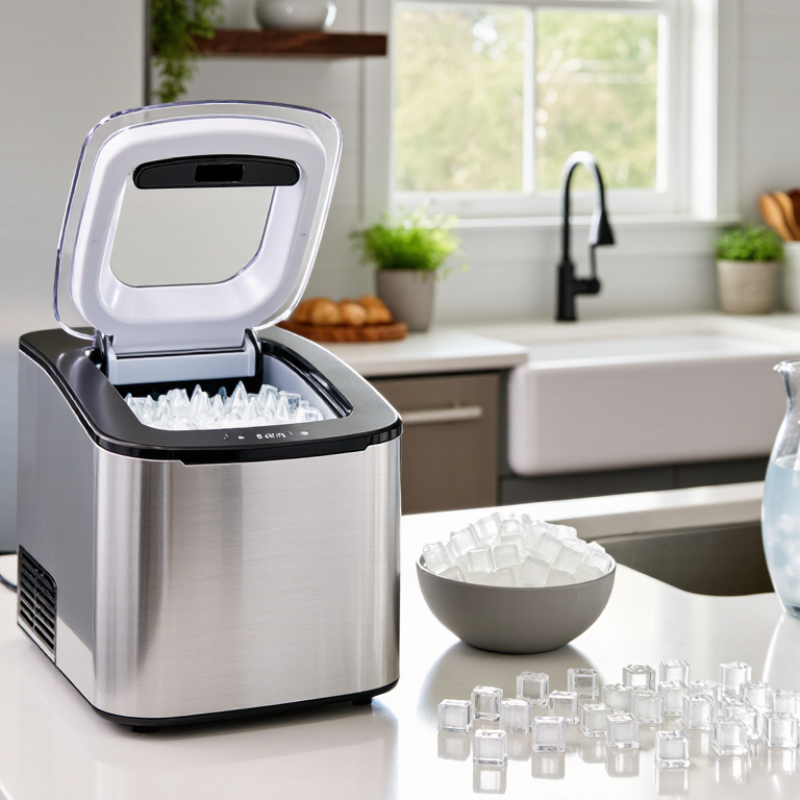
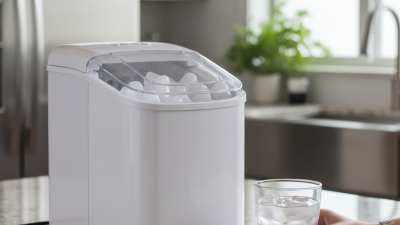
Home ice machines differ mainly in placement, water supply, and ice shape. Countertop portable models use a refillable tank and fit beside a sink or coffee station. They suit renters and occasional use, but their baskets are small, and production can slow in warm rooms. Placement matters. Leave space around the vents and empty melted water promptly.
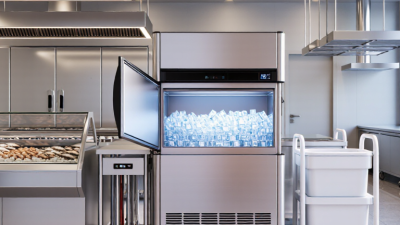
Built-in undercounter machines connect to a water line and suit households that need larger batches. They require cabinet space and may need a drain or regular manual draining. Refrigerator ice makers are convenient, though output depends on freezer space and appliance design. Some machines produce clear cubes; others make softer, chewable nuggets. Shape affects how quickly drinks chill and how much ice fits in a glass. Preference is personal. Check the drain. Compare daily output with household use, not just the advertised capacity. Filters, cleaning intervals, room temperature, and water hardness all affect performance. Mineral buildup can restrict water flow and give ice an off taste. Speed matters, but so do noise, cleaning access, and where melted water goes.
A comparison of common home ice-maker types and configurations. Features and output vary by model; the categories below are not a ranking of suppliers.
| No. | Home Ice-Machine Type | Typical Ice Style | Installation & Water Supply | Best Suited For | Practical Considerations |
|---|---|---|---|---|---|
| 1 | Portable countertop bullet ice maker | Small, hollow bullet-shaped cubes | Countertop; usually filled manually from a water reservoir | Apartments, occasional entertaining, and users who want a simple setup | Portable and generally easy to set up. Most models do not keep ice frozen, so transfer ice to a freezer for longer storage. |
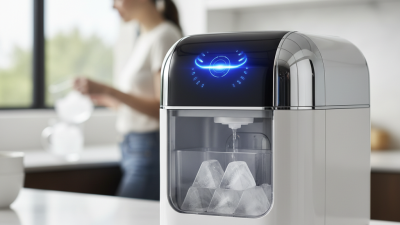
| 2 | Countertop nugget ice maker | Soft, chewable nugget or pellet ice | Countertop; reservoir-filled or, on some models, connected to a water line | Households that prefer chewable ice for cold drinks | Check cleaning instructions and available counter space. Ice-storage bins on countertop units are typically not freezer compartments. |
| 3 | Countertop clear-cube ice maker | Clear or relatively clear cubes, depending on the design | Countertop; water reservoir or a model-specific water-line connection | Home bars and users who prefer larger, slower-melting cubes | Clear-ice production can take longer than small bullet-ice production. Confirm the unit’s actual ice dimensions and storage method. |
| 4 | Undercounter crescent-cube maker | Crescent-shaped or conventional cube ice | Installed beneath a counter; commonly requires a water connection and drainage | Kitchens where a dedicated, built-in ice supply is wanted | Check cabinet dimensions, ventilation requirements, electrical needs, and whether the model needs a drain pump or gravity drain. |
| 5 | Undercounter gourmet clear-ice maker | Large, individually formed clear cubes | Built into cabinetry; generally plumbed, with drainage requirements depending on the model | Home bars and kitchens where presentation and larger cubes matter | Usually needs more installation planning than a portable unit. Check production rate, bin capacity, and the manufacturer’s clearance specifications. |
| 6 | Freestanding home ice maker | Varies by model: commonly cube, crescent, or nugget ice | Standalone floor unit; often uses a water line and may require a drain | Households needing a dedicated appliance outside the kitchen cabinetry | Measure the installation area and allow the clearances specified for airflow and servicing. Water and drainage connections may require professional installation. |
| 7 | Refrigerator-integrated ice maker | Usually small cubes or crushed ice, depending on the refrigerator | Built into a refrigerator-freezer; many models use a household water connection | Everyday kitchen use with ice stored inside the freezer | Ice production and storage are limited by the refrigerator’s design and freezer space. Some configurations may need a compatible water supply. |
| 8 | Freezer-compartment ice maker | Typically standard cubes or a model-specific shape | Installed inside a freezer; water may be supplied by a line or manually, depending on the appliance | Homes that want stored ice without a separate countertop machine | Available space and compatibility are important. For add-on units, confirm they are designed for the exact freezer model. |
| 9 | Manual-fill freezer ice maker | Usually cubes made from a refillable tray or reservoir | Operates in a freezer without a permanent water-line connection | Rentals or kitchens where plumbing access is limited | The user must refill the water source. Production depends on freezer temperature, tray design, and how often water is replenished. |
| 10 | Water-line-connected countertop ice maker | Usually bullet or nugget ice; style depends on the unit | Countertop; connected to a compatible water supply where supported | Frequent home use where repeated manual filling is inconvenient | Not all countertop models support direct plumbing. Check the connection method, water filtration guidance, and cleaning requirements before purchase. |
Selection tip: Compare the required installation space, water supply, drainage, ice style, daily production, storage capacity, cleaning routine, and ventilation needs. Specifications differ by model, so verify them before installation.