Leave Your Message

Why Choose an Ice Machine Factory for Wholesale Supply?

Choosing an Ice Machine Factory for wholesale supply can shape your product quality, margins, and customer trust. The right partner does more than offer a low unit price. It controls production, tests components, and understands how machines perform in real commercial settings.

A factory with direct manufacturing experience can explain compressor options, condenser types, insulation thickness, and daily ice output clearly. Ask to inspect the assembly line, quality checkpoints, and finished-product testing area. A reliable supplier should provide sample reports, warranty terms, spare-parts support, and transparent production schedules. Look closely at small details. Check the door seal, drain connection, stainless-steel finish, and control panel response. These details often reveal more than polished brochures.

Cost still matters. However, the cheapest quotation may hide weaker components or inconsistent testing. No supplier is flawless. A thoughtful buyer should verify claims instead of accepting every promise. Request a sample machine and operate it under realistic conditions, such as a busy restaurant kitchen or hotel service counter. Review ice shape, cycle time, noise, water consumption, and cleaning access. Certifications and electrical requirements may differ by market, so confirm current documentation before placing a wholesale order. A dependable Ice Machine Factory welcomes practical questions and explains limitations honestly. That openness supports long-term cooperation. It also reduces unpleasant surprises after shipment. Wholesale success is not built on price alone. It depends on repeatable performance, responsive communication, and evidence that the factory can deliver consistently.
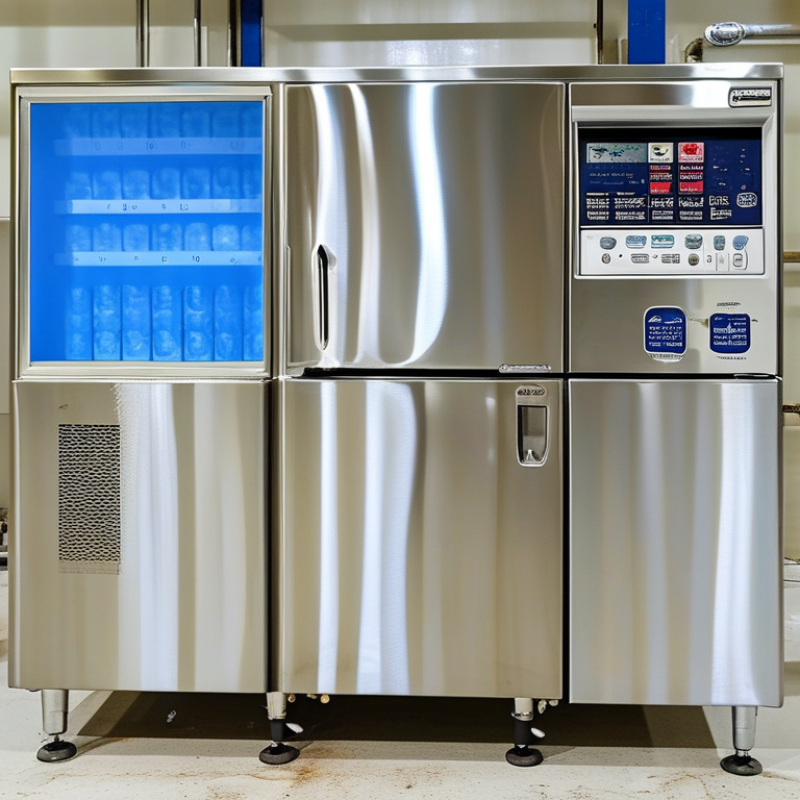
Why Choose an Ice Machine Factory for Wholesale Supply?

Ice Machine Capacity: Compare 500–10,000+ lb/Day Production Lines

Why Choose an Ice Machine Factory for Wholesale Supply?

Ice machine capacity shapes every wholesale decision. Small operations may need 500–1,000 lb per day, while busy hotels, distributors, and food facilities may require 5,000–10,000+ lb. A factory can usually adjust production lines, storage bins, and packaging systems to match these different volumes. Capacity claims should be tested under real conditions, not accepted from a brochure. Ambient temperature, water quality, ice type, and cleaning schedules can change daily output.

A 500 lb/day machine may suit a compact restaurant with limited floor space. A 3,000 lb/day line offers more flexibility for seasonal demand. Larger systems above 10,000 lb/day need stronger electrical service, water treatment, drainage, and maintenance access. I have seen buyers focus on output alone and overlook installation limits. That mistake becomes expensive. Factory engineers can review site drawings, energy use, condenser options, and spare-part access before production begins. Still, their advice should be checked against measured operating data.

Tips: Compare rated output with actual output at your local temperature. Ask for capacity tests, power consumption, sanitation procedures, and service response times. Leave room for growth, but avoid buying excessive capacity too early. Unused machinery still needs cleaning and inspection. A reliable factory should explain these trade-offs clearly and provide traceable quality records. Small details matter.

Why Choose an Ice Machine Factory for Wholesale Supply? – Ice Machine Capacity: Compare 500–10,000+ lb/Day Production Lines

Nominal Daily Capacity Approx. Hourly Output Typical Application Approx. Process Water / Day Typical Electrical Load Indicative Footprint Recommended Factory-Supply Advantage Best Fit for Wholesale Buyers
500 lb/day
227 kg/day
21 lb/h
9.5 kg/h
Small restaurants, cafés, bars, seafood counters, and test-market projects Approximately 65–85 gal
245–320 L
Approximately 2–4 kW, depending on ice type and condenser design About 1.0–1.8 m², excluding service clearance Low entry cost, easier installation, and flexible private-label or packaging options Distributors serving independent food-service customers
1,000 lb/day
454 kg/day
42 lb/h
19 kg/h
Medium restaurants, hotels, catering kitchens, and convenience stores Approximately 130–170 gal
490–645 L
Approximately 4–7 kW, subject to ambient conditions About 1.5–2.5 m², excluding storage and maintenance access Factory configuration can match voltage, ice shape, condenser type, and storage-bin requirements Regional wholesalers needing a practical standard model
2,500 lb/day
1,134 kg/day
104 lb/h
47 kg/h
Busy hotels, supermarkets, food processors, and central kitchens Approximately 325–425 gal
1,230–1,610 L
Approximately 8–15 kW, depending on refrigeration system efficiency About 3–5 m², plus space for bins, drainage, and ventilation Better unit economics, factory testing, and coordinated machine-plus-bin supply Commercial-equipment distributors and multi-site operators
5,000 lb/day
2,268 kg/day
208 lb/h
95 kg/h
Large distribution kitchens, seafood operations, beverage plants, and ice resellers Approximately 650–850 gal
2,460–3,220 L
Approximately 15–30 kW, with final demand based on site conditions About 6–10 m², excluding bulk storage and loading areas Improved freight planning, production-line integration, and configurable controls for commercial use Wholesale buyers requiring dependable daily volume
10,000+ lb/day
4,536+ kg/day
417+ lb/h
189+ kg/h
Dedicated ice plants, large seafood facilities, cold-chain hubs, and industrial resellers Approximately 1,300–1,700+ gal
4,920–6,435+ L
Approximately 30–70+ kW; large systems may require specialized electrical service About 12–25+ m², plus bulk ice storage, drainage, and material handling space Engineering support, modular expansion, customized automation, and coordinated commissioning Industrial distributors and buyers with stable high-volume demand

Reference note: Capacity figures are typical nominal production ranges for commercial ice-making systems operating continuously under standard test conditions. Actual output, water consumption, power demand, footprint, and required utilities vary with ice type, ambient temperature, inlet-water temperature, condenser configuration, operating schedule, and local electrical standards.


Wholesale Economics: Measure MOQ, Unit Cost, and Factory-Direct Savings

Why Choose an Ice Machine Factory for Wholesale Supply?

Wholesale purchasing starts with MOQ, but the lowest quantity is not always the best choice. A factory may quote 20 machines, while another requires 50. Compare the total order value, storage space, and expected sales speed. Ask whether MOQ applies per model, capacity, or shipment. Some suppliers count mixed models differently. Clarify carton dimensions and spare parts.

Small details matter.

Unit cost should include more than the machine price. Request a written breakdown before comparing offers. Include compressor specifications, packaging, accessories, testing, and estimated freight. I once compared two quotations using only the headline price. The cheaper offer became more expensive after stronger packaging and replacement parts were added. That mistake was avoidable.

A reliable supplier should explain each charge clearly and provide consistent technical documents.

Factory-direct savings can be meaningful when intermediaries are removed. Yet savings are real only when quality remains stable. Check production records, inspection procedures, and sample performance. Ask for a sample unit. Measure ice output, noise, water use, and cleaning access. Also inspect welds, insulation, and control-panel response.

Payment terms matter too. Do not judge a factory from one attractive quotation. I still prefer a slightly higher unit cost when delivery records and after-sales support are stronger.

Wholesale math rewards evidence, not assumptions.

Energy Efficiency: Check DOE Limits for Commercial kWh per 100 Pounds

Why Choose an Ice Machine Factory for Wholesale Supply?

Energy efficiency should be checked before comparing wholesale prices. The U.S. Department of Energy regulates commercial ice makers under 10 CFR 431.136. Its tables measure energy use in kWh per 100 pounds of ice. Limits vary by ice type, condenser design, and production capacity. Many commercial categories fall near 5–8 kWh per 100 pounds. A lower figure can reduce electricity costs across a busy foodservice operation. However, the number is meaningful only when the test category matches the machine.

My first comparison was too simple. That was a mistake. A factory quotation of 4.5 kWh per 100 pounds may appear excellent. Yet it may use different production conditions or exclude auxiliary equipment. The DOE Commercial Appliance Standards Technical Support Document explains why test procedures matter. Independent efficiency programs also commonly set performance levels above federal minimums. Ask for the tested harvest rate, condenser type, water consumption, and operating temperature. Request laboratory records, not only a sales sheet. Reliable factories should explain these details clearly.

Tips: Compare lifetime energy cost, not only unit price. Multiply daily ice production by the quoted kWh per 100 pounds. Then check local electricity rates and seasonal heat. Inspecting one running machine can reveal noisy fans, warm discharge air, or unstable ice cycles. Those details are easy to miss. Slightly imperfect calculations are better than confident guesses.

Why Choose an Ice Machine Factory for Wholesale Supply?

Energy efficiency is an important factor when comparing commercial ice machines. The chart shows representative maximum energy-use limits for selected commercial automatic ice machine categories under U.S. Department of Energy requirements, expressed in kilowatt-hours per 100 pounds of ice.

Lower values indicate lower electricity consumption per 100 pounds of ice. Actual performance can vary according to ice type, production capacity, condenser configuration, ambient temperature, and installation conditions. Reference: U.S. Department of Energy, 10 CFR §431.136, “Automatic Commercial Ice Makers.”

Food Safety: Verify NSF/ANSI 12 and FDA 2022 Potable-Water Requirements

Choosing an ice machine factory for wholesale supply requires more than checking output and price. Food safety must be verified before production begins. Ask for current NSF/ANSI 12 certification or test evidence for the exact machine model. Do not accept a certificate covering only a similar product. The standard addresses automatic ice-making equipment, including sanitation-related design and construction details.

The water path deserves equal attention. FDA Food Code 2022 requirements emphasize an approved potable-water source and protection from contamination. Review the inlet materials, internal tubing, drain design, air gap, and backflow prevention. Confirm that food-contact surfaces are smooth, durable, and easy to clean. Factory records should show material specifications, sanitation procedures, inspection results, and lot traceability. Clear records matter during wholesale distribution.

A practical audit can expose weak points. Paperwork may look complete, while a poorly sealed fitting remains difficult to clean. Ask the factory to demonstrate cleaning access and explain its corrective-action process. Require pre-shipment inspection samples and retain test reports for each production batch. Water quality can also vary by installation site, so the factory should provide operating guidance without treating certification as a substitute for local checks. Small gaps in verification can become large food-safety concerns.

Supply Reliability: Evaluate Lead Times, Spare Parts, and Warranty KPIs

Why Choose an Ice Machine Factory for Wholesale Supply?

Supply reliability is more than promising fast delivery. In factory audits, buyers should request median lead time, worst-case lead time, and on-time-in-full delivery records. The 2024 MHI Annual Industry Report found that 55% of supply-chain professionals planned to increase automation investment. This signals a practical shift toward measurable production control. Ask whether the factory uses digital scheduling, batch tracking, and capacity alerts. A spreadsheet alone may not reveal a hidden bottleneck.

Spare-parts performance deserves equal attention. Request a parts availability rate, response time, and stock location for compressors, pumps, sensors, and control boards. A useful target is 95% availability for common parts, with dispatch within 48 hours. The World Bank’s 2023 Logistics Performance Index evaluates timeliness on a 1-to-5 scale, showing why transport visibility matters after production ends. Require shipment tracking and documented packaging tests. Small details matter. A damaged condenser can delay installation for days.

Warranty KPIs should be written into the supply agreement. Track first-response time, repair closure time, repeat-failure rate, and warranty claim ratio by model. A 24-hour response sounds strong, but closure may take three weeks. That gap is often missed. Review monthly data, not attractive annual averages. No forecast is perfect. Even a capable factory can miss a rush order, so honest escalation procedures may be more valuable than exaggerated promises.