Leave Your Message

How to Find a Top Ice Maker Factory in China?

Finding a dependable Ice Maker Factory in China requires more than comparing product prices. The global commercial ice maker market continues to expand, according to Grand View Research and Technavio market outlooks. Energy efficiency is also becoming critical. ENERGY STAR data shows that certified commercial ice machines can reduce energy consumption and operating costs over their service life. These figures matter. However, factory claims still need verification.

A useful reminder comes from refrigeration consultant Michael R. Peterson: “A reliable ice machine begins with a repeatable manufacturing process.” Buyers should examine factory history, production capacity, compressor brands, stainless-steel grades, and testing procedures. Request clear photos of the assembly line. Ask for water-flow tests, ice-production records, noise measurements, and temperature data. A serious manufacturer should explain its insulation design, cleaning access, and replacement-parts system without hesitation.

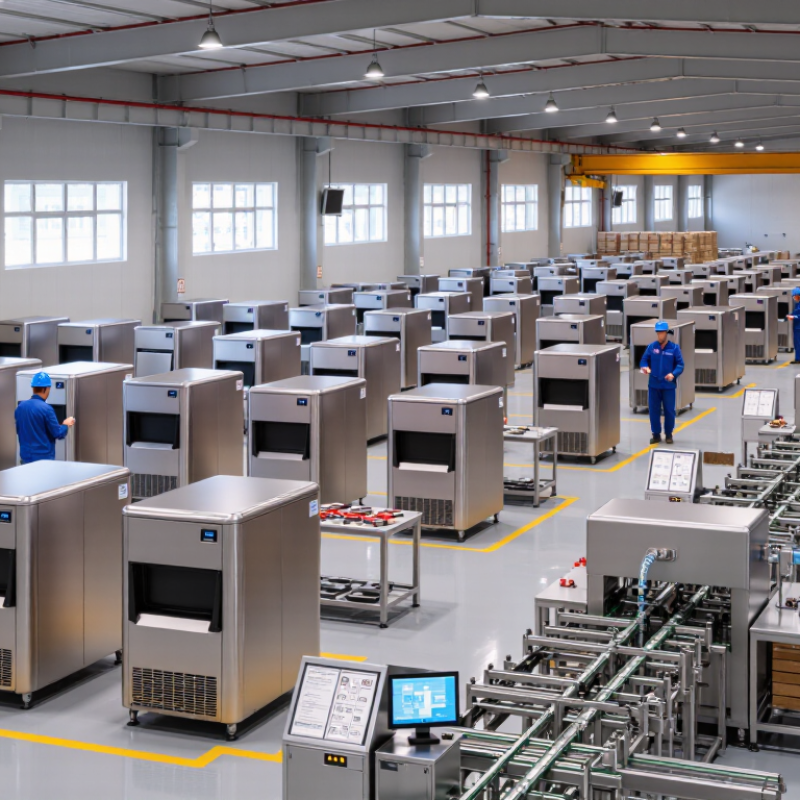
Factory audits can reveal details that brochures hide. Look for organized wiring, labeled components, sealed food-contact areas, and technicians checking finished units. ISO 9001 certification may support quality control, but it does not replace an on-site review. This is where many buyers become too confident. A polished showroom proves little. Recent export records, stable lead times, and consistent customer feedback offer stronger evidence. Even then, no supplier is perfect. The better question is not, “Who offers the lowest quotation?” It is, “Who can prove the same performance across repeated shipments?” That answer usually separates a trading company from a capable Ice Maker Factory.

How to Find a Top Ice Maker Factory in China?

Define Your Ice-Making Needs and Purchasing Requirements

How to Find a Top Ice Maker Factory in China?

Define Your Ice-Making Needs and Purchasing Requirements

A reliable factory search begins with accurate demand data. Estimate daily ice consumption, peak-hour demand, storage time, and installation space. A café may need 100 kilograms daily, while a seafood processor may require several tons. The ice form also matters. Cubes suit beverages, flakes support food displays, and nuggets serve quick-service applications. Do not rely on average demand alone. Peak periods expose weak calculations.

ENERGY STAR reports that certified commercial ice machines can use about 10% less energy and 15% less water than standard models. These figures make efficiency a practical purchasing requirement, not a marketing phrase. Ask factories for measured production capacity, water consumption, energy use, and recovery time. Request test conditions, including ambient temperature and water temperature. A number without conditions can mislead.

Your specification should also cover voltage, refrigerant type, water filtration, drainage, noise, and cleaning access. Food-contact components should meet recognized hygiene requirements, such as NSF/ANSI 12 where applicable. Consider local certification needs before requesting a quotation. A factory may offer an attractive price but lack suitable testing documents. That is a costly gap. Build a comparison sheet with technical and service requirements. Keep some flexibility, too. Ice demand forecasts are rarely perfect, and oversized equipment may waste water, power, and floor space.

Compare Ice Maker Types, Capacities, and Production Technologies

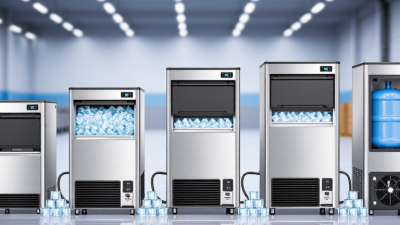
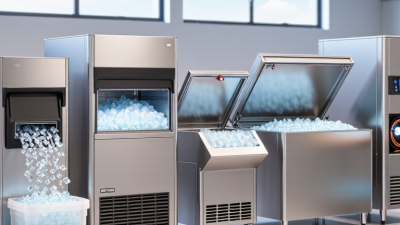
Finding a top ice maker factory in China starts with comparing the machine, not the brochure. Cube ice suits hotels, restaurants, and packaged drinks because it melts slowly. Flake ice works better for seafood displays and food processing. Nugget ice feels softer and is popular in beverages. Tube ice offers a clear, dense shape, but its output may depend heavily on water quality.

Capacity needs careful checking. A factory may advertise 1,000 kilograms daily, measured under ideal conditions. Ask for output at your target room temperature, water temperature, and voltage. A small commercial unit may produce 50 to 300 kilograms per day. Industrial systems can exceed several tons. Request production records, energy data, and a live trial. Watch the harvest cycle.

Technology reveals factory competence. Compare air-cooled and water-cooled condensers. Air cooling usually simplifies installation, while water cooling may perform better in hot environments but needs more water management. Check stainless-steel contact surfaces, insulation thickness, filtration, compressor protection, and control-system alarms. Ask how technicians test ice clarity, thickness, noise, and sanitation between production runs. Factory audits should include welding quality, spare-part storage, and final inspection documents.

No comparison is perfect. I would still question unusually low prices. They may hide thinner insulation or weaker electrical components. A factory should explain these trade-offs clearly, provide sample data, and accept reasonable third-party inspection. My own evaluation would include a seven-day pilot, because one successful demonstration proves little.
Verify Factory Credentials, Manufacturing Standards, and Certifications

How to Find a Top Ice Maker Factory in China?

Verify Factory Credentials, Manufacturing Standards, and Certifications

A reliable ice maker factory should provide a valid business license, factory address, and export history. Check whether the legal company name matches every contract and certificate. A video tour is useful, but an on-site audit reveals more. Look for clean assembly lines, labeled storage areas, and workers following written procedures. Ask how long the factory has produced commercial ice machines. Experience matters when designs require stable cooling performance.

Review the factory’s quality system, such as ISO 9001, and confirm its certificate with the issuing organization. Certifications must match the destination market, product category, and exact model. A certificate with no matching model is a warning. Check the certification number, validity period, factory location, and testing scope. Do not accept scanned documents without verification. Paperwork can look perfect.

Manufacturing details deserve close attention. Ask for stainless steel specifications, refrigerant information, insulation tests, and electrical safety records. Request production samples and inspect welds, door seals, water filters, and control panels. A dependable factory should explain its incoming inspection, testing, and final inspection procedures. It should also provide batch records for key components. Small gaps may appear during an audit. That is normal. What matters is whether the factory records them, corrects them, and shares evidence. Product claims should come from test data, not confident promises.

Assess Product Quality, Customization, Pricing, and Delivery Capabilities

How to Find a Top Ice Maker Factory in China?

A reliable factory should prove product quality with more than attractive photographs. Request a live video inspection of the production line, assembly area, and testing stations. Check stainless steel grades, compressor sources, insulation thickness, and ice output under different room temperatures. Ask for test reports, food-contact material documents, and records from previous production batches. A sample should run continuously, not just start successfully.

Tips: Compare factories using the same specifications. Record noise, ice-making time, water use, and temperature during testing. I once focused too much on appearance, and that was a mistake. Internal drainage and cleaning access mattered more after installation. Customization also needs careful review. Confirm logo placement, control panels, voltage, plug type, packaging, and software settings. Ask whether changes require new tooling or only revised assembly instructions. Approval samples should include drawings and measurable tolerances.

Pricing should show every major cost, including tooling, spare parts, packaging, inspection, and shipping terms. A low quotation may hide weaker materials or limited after-sales support. Request a staged payment plan linked to production milestones. Delivery capability deserves equal attention. Review monthly capacity, lead times for key components, quality-control checkpoints, and loading procedures. Ask how the factory handles urgent orders or delayed components. A written production schedule is useful, but it is not a guarantee. Verify performance through references, factory records, and a small trial order before scaling.

How to Find a Top Ice Maker Factory in China? - Assess Product Quality, Customization, Pricing, and Delivery Capabilities

Assessment Dimension Key Evaluation Metric Recommended Benchmark Evidence to Request Weight Factory Score
(1–5)
Product Quality Ice production capacity Actual output should be within ±10% of the rated daily capacity under stated ambient and water conditions. Independent performance test, technical data sheet, and production video with time-stamped measurements. 12% —
Product Quality Food-contact materials Ice-contact surfaces should use corrosion-resistant, food-grade materials such as stainless steel approved for the target market. Material declarations, supplier certificates, and food-contact compliance test reports. 10% —
Product Quality Electrical and safety compliance Configuration should match the destination voltage, frequency, plug type, and applicable electrical safety requirements. Valid conformity documents, wiring diagrams, safety test reports, and product labels. 10% —
Product Quality Leakage, noise, and operating stability No visible water leakage during continuous operation; noise should be measured and reported in dB(A) at a defined distance. Factory acceptance-test records, noise test method, and a continuous-operation demonstration. 8% —
Customization Private-label and packaging options Ability to provide approved artwork, multilingual manuals, customized labels, cartons, and barcode placement. Artwork template, packaging samples, label proof, and written approval workflow. 8% —
Customization Technical modification capability Factory should be able to modify voltage, water inlet configuration, ice shape, control panel language, and selected dimensions. Engineering change procedure, drawings, prototype samples, and tooling quotation where applicable. 8% —
Customization Minimum order quantity Stock models commonly support lower quantities; customized packaging or components may require a higher MOQ agreed in writing. Official quotation showing MOQ by model, customization type, and packaging option. 5% —
Pricing Total landed-cost transparency Quotation should separate product price, tooling, packaging, inspection, inland transport, freight, and applicable taxes or duties. Itemized quotation with Incoterms, currency, quotation validity, and payment terms. 10% —
Pricing Warranty and spare-parts cost Warranty coverage, exclusions, response time, and replacement-part pricing should be stated before order confirmation. Warranty policy, spare-parts list, service contact, and replacement procedure. 7% —
Delivery Capability Production lead time Standard products are often scheduled within approximately 20–45 calendar days; customized orders may require additional time. Written production schedule, capacity plan, and lead-time commitment linked to the purchase order. 8% —
Delivery Capability Quality control before shipment Every unit should receive documented inspection covering appearance, electrical safety, operation, water leakage, and packaging. Inspection checklist, batch photographs, test records, and pre-shipment inspection acceptance criteria. 7% —
Delivery Capability Export packing and logistics support Packaging should protect the unit against moisture, impact, and movement during multimodal transportation. Carton specifications, palletization plan, loading photographs, shipping documents, and logistics references. 7% —
Total Evaluation Weight 100% —
Scoring Guide: 1 = insufficient evidence, 2 = below expectations, 3 = acceptable, 4 = strong capability, 5 = fully verified and consistently documented.

Conduct Factory Audits, Request Samples, and Confirm After-Sales Support

How to Find a Top Ice Maker Factory in China?

A serious factory audit should examine more than a clean showroom. Ask to see the production line, testing area, warehouse, and quality records. Check how workers assemble compressors, water pumps, insulation, and electrical controls. Observe whether each machine receives an ice-making and leakage test before packing. Request recent inspection reports, material specifications, and production capacity details. These documents help separate real capability from impressive sales language.

Samples reveal problems that photos cannot show. Test ice size, freezing speed, noise, energy use, and water consumption under normal conditions. Run the machine for several days, not just one afternoon. Inspect the ice bin, drain system, control panel, and packaging after repeated use. A sample may perform well but still expose weak details. That is valuable evidence, not a failure. Record every issue and ask the factory to explain its corrective action in writing.

After-sales support deserves the same attention as the product itself. Confirm warranty coverage, response times, spare-parts availability, troubleshooting guides, and remote technical assistance. Ask who handles urgent failures after delivery. A dependable supplier should provide clear service contacts and replacement procedures. It should also explain which parts are regularly stocked in China. No audit is perfect. Hidden risks can remain, especially when communication is rushed. Keep written records, test claims independently, and avoid choosing only by the lowest quotation.

How to Find a Top Ice Maker Factory in China

A practical supplier evaluation should balance factory audits, product samples, and after-sales support. Audits verify production capability and compliance, samples confirm ice-making performance and build quality, while after-sales support reduces installation, maintenance, and warranty risks.