How to Choose the Best Table Top Ice Maker for Your Needs?
When it comes to selecting the perfect Table Top Ice Maker, making an informed choice is crucial. Industry expert Mark Stevens, a renowned appliance specialist, once stated, "Choosing the right ice maker can elevate your entertaining experience." His insight highlights the importance of understanding your specific needs before making a purchase.
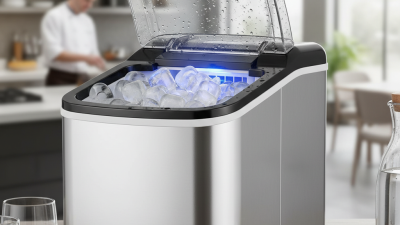
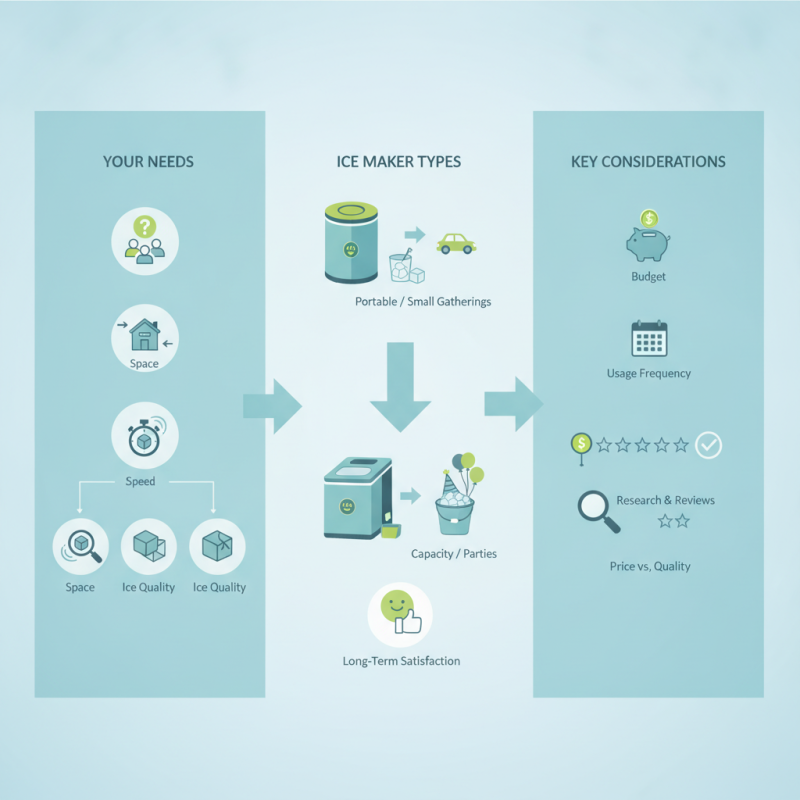
Table Top Ice Makers vary significantly in design and function. Some are compact and portable, ideal for small gatherings. Others offer larger capacities, perfect for parties. Features like ice size options and speed of production should heavily influence your decision. You might wonder which features matter most for your lifestyle. Are you prioritizing space, speed, or ice quality?
The best approach involves researching models and reading customer reviews. It's essential to consider your budget and usage frequency. Balancing price with quality can be challenging. You may find that a more expensive model offers better longevity. Reflect on what suits your situation best; it’s not just about the initial purchase, but long-term satisfaction with your Table Top Ice Maker.
Understanding Your Ice Production Needs and Preferences
When selecting the right tabletop ice maker, understanding your ice production needs is essential. Industry reports indicate that most households consume between 1 to 5 pounds of ice daily. For a family of four, this usually means you'll need a machine that produces at least 28 pounds of ice per day. A common misconception is that all ice makers produce the same type of ice. In reality, ice texture varies. Cubed ice, nugget ice, and flake ice serve different purposes. You should consider what type best fits your usage.
Additionally, the storage capacity of the machine plays a crucial role. Many models have a storage bin that can hold anywhere from 1 to 3 pounds of ice. If your needs are higher, choose a model with a larger storage capacity to avoid frequent replenishment. Some have quick production times, making 9 ice cubes in as little as 7 minutes. But it is worth noting that the initial cooling time may affect production rates after the first batch.
Moreover, it’s important to reflect on your available space. Many tabletop machines are compact, yet some may be slightly bulkier. Make sure your counter space can accommodate the machine, while still allowing for ventilation. Compatibility with your household’s kitchen décor can also enhance the user experience. Finding the right balance between functionality and aesthetics can be challenging but is necessary for long-term satisfaction.
Key Features to Consider in a Table Top Ice Maker
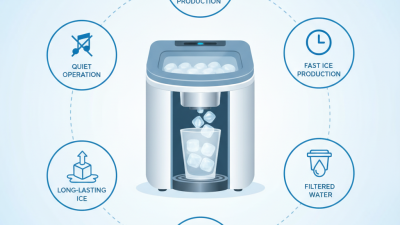
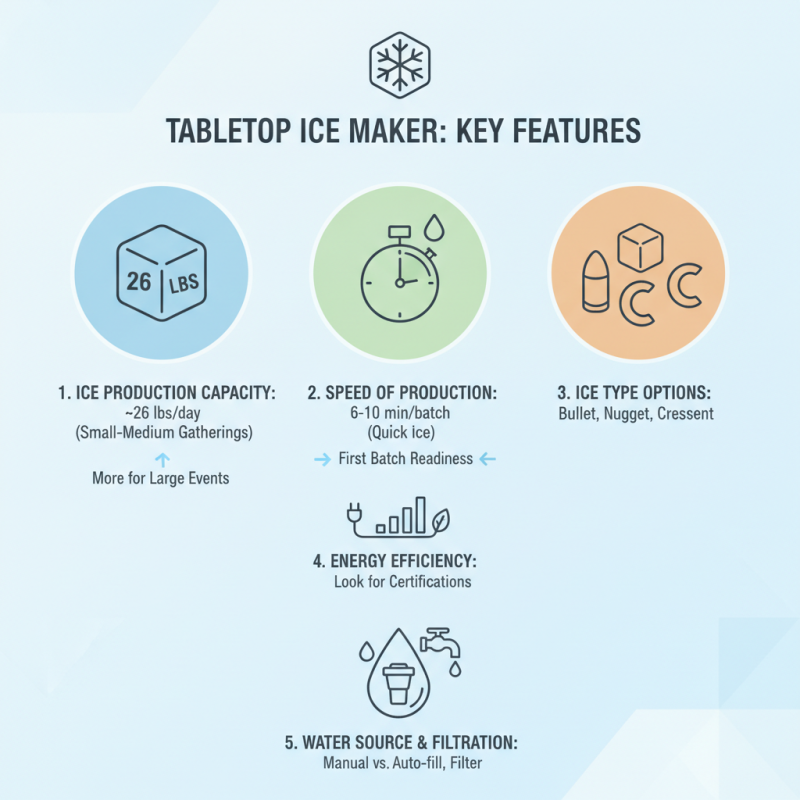
When selecting a table top ice maker, there are several key features to consider. First, ice production capacity is crucial. Many models can produce around 26 pounds of ice daily. This volume suits small to medium gatherings. However, if you often host larger events, you may need a unit that can produce more. Evaluate how much ice you typically use to avoid running out during busy periods.
Speed is another important feature. Some ice makers can produce their first batch in as little as six to eight minutes. This quick turnaround is essential for parties or gatherings. However, speed can vary between models. Not all claim similar performance, so refer to user reviews for insights into actual experience.
Size and portability also matter. If space is limited in your kitchen or bar area, compact models are available. They can fit on countertops without taking too much space. Check the dimensions of potential ice makers to ensure a good fit. Also, consider user-friendliness. Simple controls and easy-to-clean designs can significantly enhance your experience. Data from consumer reports shows that over 70% of users prioritize ease of use when selecting an ice maker.
Assessing Size and Capacity for Your Space and Usage
When selecting a table top ice maker, size and capacity are crucial factors. Consider how much space you have available. A compact unit fits well in small kitchens or on countertops. If you’re short on room, check the measurements before buying. A unit that takes up too much space can lead to frustration.
Capacity is another vital aspect. Think about how often you’ll use the ice maker. For occasional use, a smaller capacity might suffice. However, if you host parties or enjoy frequent cold drinks, a larger capacity would be more effective. Imagine running out of ice during a gathering. It’s inconvenient, right? Finding the right balance between size and capacity can impact your experience.
Also, evaluate your lifestyle. Active families or entertainers may need an ice maker that produces quickly. In contrast, if your needs are minimal, an energy-efficient model may serve you better. Keep in mind the potential for noise as well. Some models operate quietly, while others can be disruptive. Assessing these details will help you make an informed decision.
Comparing Types of Ice Produced by Different Models
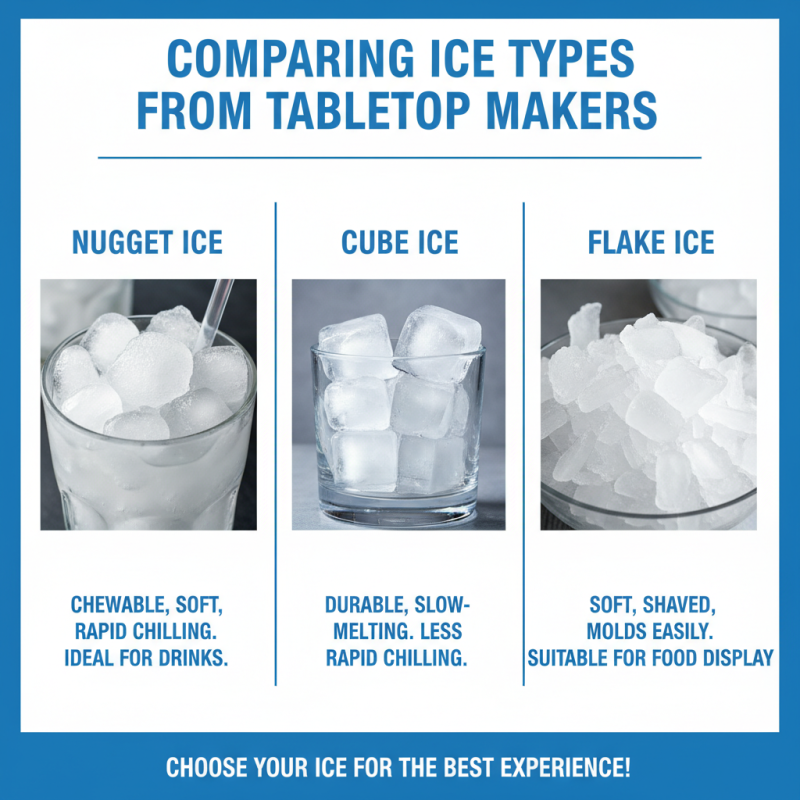
When selecting a table top ice maker, understanding the types of ice produced is crucial. Different models generate various ice shapes, affecting the user experience. Common shapes include nugget, cube, and flake ice. Nugget ice is favored for its chewable texture, ideal for drinks. In contrast, cube ice is often more durable but may not chill beverages as rapidly.
Reports indicate that 68% of consumers prefer nugget ice for cocktails and soft drinks. Flake ice, with its small, lightweight pieces, is often used for seafood displays and blended drinks. However, some models produce inconsistently sized ice, impacting their functionality. A user survey from the International Ice Machine Association emphasized this issue. Many households noted that the type of ice influenced their overall satisfaction.
Consideration of ice types impacts efficiency too. For instance, nugget ice makers typically take longer to produce a batch compared to cube ice makers. Users may find themselves refilling water more frequently. Since each type serves distinct purposes, personal needs and preferences should guide your decision. Be aware that cost may not always align with quality.
Evaluating Price, Brand Reputation, and Customer Reviews
When choosing a tabletop ice maker, customer reviews play a crucial role. According to a report from the Appliance Manufacturer Association, around 89% of consumers rely on online reviews before making a purchase. Real user experiences provide valuable insights into performance and durability. A product may seem appealing, but negative feedback can reveal flaws not immediately visible in marketing materials.
Price is another critical factor. A study by the Consumer Electronics Association indicates that products priced significantly lower than competitors often sacrifice quality. If a machine costs less than average, it might not meet expectations in terms of ice production and longevity. Customers should carefully weigh the initial investment against potential long-term costs, such as repairs and replacements.
Brand reputation also deserves attention. Companies with a long history often have established trust. However, newer brands may offer innovative features or better customer service. Research shows that 70% of buyers prefer brands with proven service records. A reputable brand combined with positive reviews can lead to a more satisfying purchase. Balancing price, reviews, and brand trust is essential for finding the right ice maker.
How to Choose the Best Table Top Ice Maker for Your Needs? - Evaluating Price, Brand Reputation, and Customer Reviews
| Model |
Price ($) |
Brand Reputation |
Customer Reviews (out of 5) |
Ice Production (lbs/day) |
| Model A |
249.99 |
High |
4.8 |
28 |
| Model B |
199.99 |
Medium |
4.2 |
26 |
| Model C |
179.99 |
Low |
3.9 |
20 |
| Model D |
299.99 |
High |
4.7 |
30 |
| Model E |
139.99 |
Medium |
4.0 |
15 |