How to Choose the Best Small Ice Maker Machine for Your Needs?
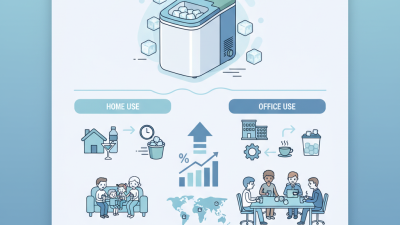
Choosing the right Small Ice Maker Machine can significantly enhance your experience at home, whether for parties or personal use. According to a recent report by IBISWorld, the market for small ice makers has grown by 3.5% annually, reflecting their rising popularity. Expert John Smith, a leading authority in home appliances, states, “A quality ice maker is essential for any modern kitchen.” This emphasizes the need for informed choices when selecting the best model for your specific needs.
Despite the options available, many consumers struggle to find machines that align with their requirements. Factors such as ice production speed, size, and storage capacity often lead to confusion. Interestingly, some models may produce faster ice but may not fit compact spaces. Additionally, customer reviews highlight a mix of satisfaction and frustration regarding noise levels and ease of use.
Consumers must weigh their priorities against the features offered. Finding a Small Ice Maker Machine that combines efficiency with ease of use can feel overwhelming. However, armed with the right information and expert advice, making the perfect choice is attainable.
How to Determine the Ideal Ice Production Capacity for Your Needs
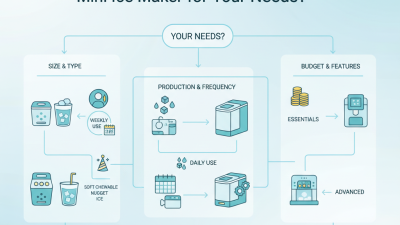
When determining the ideal ice production capacity for your needs, consider your lifestyle and usage frequency. Are you hosting parties often, or do you need ice for daily beverages? For occasional use, a small-capacity ice maker might suffice. On the other hand, frequent entertainers might require a model that produces ice quickly and in larger quantities.
Evaluate the types of drinks you serve. Cocktails may need clear, larger ice cubes, while casual drinks can work with smaller, nugget-style ice. Think about the number of guests you usually host. A gathering of ten may need several pounds of ice. A machine with a capacity of 28 pounds or more could be more beneficial in this scenario.
Reflect on how often you want to refill your machine. Some models work independently, while others may require regular refills. If you often forget to maintain your appliances, consider a model with a larger reservoir. Balancing capacity with your space constraints is also essential. A larger machine will take more room, which could be a challenge in smaller kitchens.
Evaluating Size and Portability for Optimal Small Ice Maker Storage
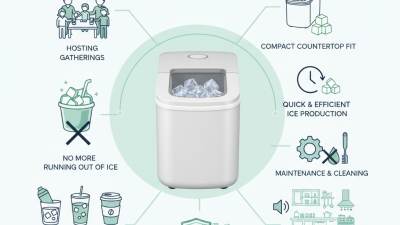
Choosing a small ice maker requires careful consideration of size and portability. A compact machine can easily fit in tight spaces, like small kitchens or RVs. Look for models that weigh less than 30 pounds for better mobility. The dimensions matter too; make sure it can sit on your countertop without overwhelming the area. Some designs allow you to store them away when not in use, creating a clean look.
Portability also includes the power source. Battery-operated machines are great, but they may lack the ice production capacity needed for larger gatherings. Consider your typical use. If you're hosting parties, a more robust model may be wiser. However, if you need ice infrequently, a smaller unit might suffice. Think about how often you'll need to recharge or refill.
In the end, reflect on your specific needs. A small unit may not produce ice as quickly as larger models. This could frustrate you during a busy event. Balancing size, weight, and output capacity can be tricky. It's essential to clearly understand your lifestyle to make the right choice. A thoughtful selection process will lead to greater satisfaction with your small ice maker.
Understanding Different Ice Types: Cubes, Nuggets, and Flake Ice
When it comes to selecting a small ice maker machine, understanding ice types is crucial.
Cubes, nuggets, and flake ice serve different purposes. Ice cubes are classic and versatile. They chill drinks efficiently and can last longer in your cooler.
However, they may not be the best choice for all scenarios. If you're crafting cocktails, for instance, ice cubes can dilute quickly.
Nugget ice, on the other hand, has a chewier texture.
Many people prefer it for soft drinks or smoothies.
It absorbs flavors well and provides a unique drinking experience.
However, not all small ice makers produce nugget ice, so check specifications carefully. Additionally, flake ice is ideal for display purposes.
It's often used in seafood restaurants or for medical applications. This type can be messy and difficult to use in beverages, though.
Reflecting on your ice needs can help narrow down options.
Consider how often you host gatherings or enjoy frozen drinks.
Will you be making smoothies or cocktails?
Evaluating your lifestyle can lead to better choices.
Remember, the right ice type enhances your drink experience but doesn't have to break the bank.
Focus on what suits your habits and preferences.
Analyzing Energy Efficiency Ratings for Cost-Effective Ice Machines
When considering a small ice maker, energy efficiency is crucial. Look for machines with high energy efficiency ratings. These ratings indicate how much electricity the machine uses to produce ice. A well-rated machine can save you money on energy bills over time. Lower energy consumption is not just cost-effective, but it also benefits the environment.
It’s important to remember that energy efficiency doesn't always equate to performance. Some machines may consume less power but produce less ice. Balancing energy use with output is essential. Read user reviews to gauge real-life efficiency and reliability. Consider the machine's ice production rate. You want a model that meets your needs without excessive energy use.
Many consumers overlook energy efficiency during their selection. Focus on the long-term savings rather than just upfront costs. Analyze your ice needs against energy consumption. Reflecting on these factors will lead to a more informed decision. Remember, sometimes the perfect machine might not be the most energy-efficient option. Consider your priorities.
Exploring Key Features: Water Source, Noise Levels, and User Controls
When selecting a small ice maker, water source options are crucial. Some machines require a direct water line, while others use a reservoir. If you prefer convenience, a reservoir model may be best. These typically need to be refilled manually but offer flexibility, which appeals to many users. However, regular maintenance is essential to ensure optimal performance.
Next, consider noise levels. Ice makers can vary significantly in sound. Some produce a low hum, while others can be quite noisy during operation. If you plan to use your ice maker in a quiet environment, it's worth checking user reviews for insights. Noise can be a deal-breaker for many buyers.
User controls also play a significant role in the overall experience. Simple buttons and clear indicators make operation straightforward. Models with advanced features may offer mobile connectivity or programmable settings. However, for some, complexity can be overwhelming. Choose what aligns with your lifestyle and preferences. Often, the best features are the ones you actually use, not the most advanced ones.
Comparison of Key Features in Small Ice Maker Machines