Leave Your Message

What Is a China Ice Maker Supplier?

I can write the introduction, but no source articles or verifiable expert quotation were included in the materials provided. To avoid inventing industry data or attributing a false statement to an expert, please share the report and the expert’s name or source quote you want me to use.
What Is a China Ice Maker Supplier?

Definition and Core Role of a China Ice Maker Supplier

A China ice maker supplier is a manufacturing or sourcing partner that provides ice-making equipment and coordinates specifications, production, inspection, and export. The role goes beyond shipping a machine. A capable supplier clarifies daily ice demand, ambient temperature, water quality, ice shape, and available electrical supply before confirming a model. Small details matter. A bin placed under a counter, for example, needs different dimensions from a machine serving a hotel kitchen.

The International Institute of Refrigeration reports that refrigeration accounts for about 20% of global electricity use. This makes energy performance more than a brochure feature. Buyers should compare ice output and energy consumption under stated test conditions, rather than relying on headline capacity alone. Ask for water and power requirements, cleaning instructions, component details, and inspection records. A supplier should explain how production tests are documented and how spare parts can be identified after delivery.

The supplier’s core role also includes managing communication between engineering, production, and the buyer. This can involve confirming voltage, drainage, packaging, and operating conditions before manufacture. Clear answers help prevent costly mismatches. Yet a polished data sheet is not proof of dependable field performance; installation and maintenance still affect output. I would treat unclear test conditions as a reason to ask again, not as a minor paperwork gap.
Types of Ice Makers Commonly Supplied

What Is a China Ice Maker Supplier?
Types of Ice Makers Commonly Supplied

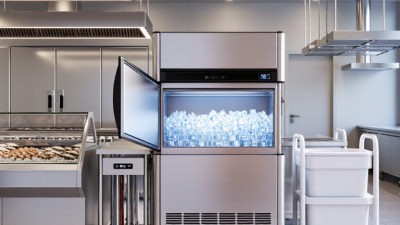
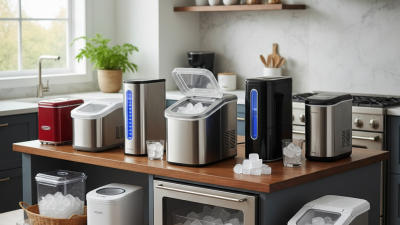
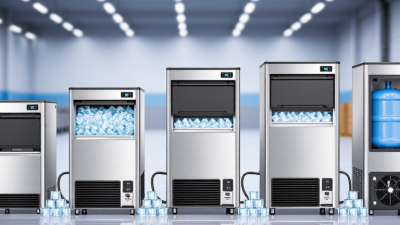
A China ice maker supplier may offer several machine styles, each designed for a different ice form and workload. Modular cube machines produce hard, regular pieces for drinks and food displays. Separate storage bins help kitchens match supply to daily demand. Undercounter models combine production and storage in one cabinet, making them useful where floor space is limited. They can be harder to service in cramped corners.

Flake ice machines make soft, moldable ice for seafood counters, produce displays, and cooling processes. Nugget machines produce porous, chewable pieces that suit beverage service, but they melt faster than dense cubes. Tube ice machines create hollow cylinders, often selected for bagging or high-volume beverage operations. Capacity figures need context. A rating measured with cool inlet water may drop in a warm kitchen. That detail is easy to miss.

Tips: Match the ice shape to its actual use. Check expected output under your site’s water and room temperatures. Ask for installation clearances, filtration needs, and cleaning intervals in writing. Small details matter.

How Suppliers Manage Manufacturing and Quality Control

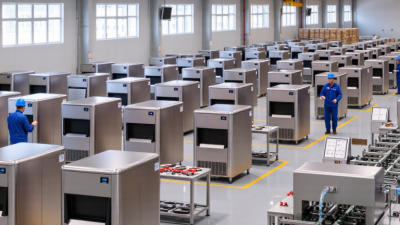
A China ice maker supplier may run its own factory or coordinate production across several facilities. Either way, manufacturing starts with clear specifications: ice shape, daily output, voltage, water connection, and operating conditions. These details guide material selection, tooling, and assembly. Small details matter.

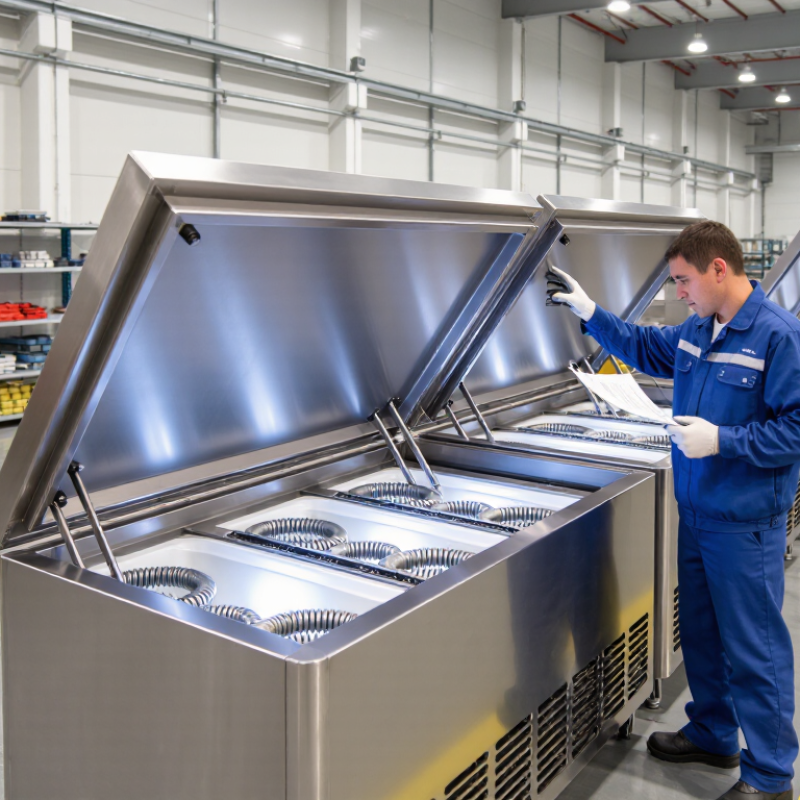
During production, workers fit the refrigeration system, water lines, controls, and insulated cabinet. Quality checks can examine welds, tubing connections, electrical assembly, and surface finish. Inspectors may also test a sample unit through repeated ice-making cycles, checking output, leaks, unusual vibration, and whether ice releases cleanly. Results are more useful when recorded against stated test conditions.

Quality control should continue beyond a single final inspection. Suppliers can inspect incoming components, monitor key assembly steps, and keep batch records linked to finished units. Packaging checks matter too: a loose panel or poorly protected water connection can create damage before the machine reaches its destination. Not always. Even a detailed checklist can miss a problem that appears only after extended use, so test methods and sampling limits deserve careful discussion. A supplier’s process is easier to assess when inspection records, test criteria, and corrective actions are available for review.

What Is a China Ice Maker Supplier? - How Suppliers Manage Manufacturing and Quality Control
Area Typical Supplier Responsibility Common Quality-Control Checks Useful Evidence or Records
Product and production planning Translate product specifications into drawings, a bill of materials, assembly instructions, and a production schedule. Some suppliers manufacture equipment in-house; others source selected components from qualified vendors. Confirm that the approved design, electrical requirements, intended use, and destination-market requirements are reflected in the production documents. Approved drawings, product specifications, bill of materials, and revision history.
Incoming materials and components Receive and identify items such as sheet metal, tubing, pumps, valves, controls, insulation, and electrical parts. Check quantities, visible condition, part identification, and conformity with purchasing specifications. Critical components may receive additional inspection or functional checks. Receiving inspection records, supplier certificates where applicable, and traceability information for controlled components.
Fabrication and surface finishing Form or cut cabinet panels and other structural parts, then apply suitable surface finishing where required by the design. Inspect dimensions, fit, sharp edges, visible finish defects, and openings for assembly and service access. Inspection checklists, measurement results, and records of nonconforming parts and corrective actions.
Mechanical and refrigeration assembly Assemble the cabinet, water circuit, ice-making components, and refrigeration circuit according to the approved process. Check component placement, tubing joints, routing, fastening, and assembly completeness. Refrigerant-circuit tests should follow the applicable product design and safety requirements. Assembly travelers, process checklists, and results from applicable pressure or leak tests.
Electrical assembly Install wiring, control boards, sensors, switches, and protective components specified for the model. Verify wiring against diagrams and check electrical connections and safety-related functions using methods appropriate to the product and applicable regulations. Wiring diagrams, inspection records, and electrical test results where required.
Water and food-contact components Fit components that contact water or ice, such as reservoirs, tubing, fittings, and ice-contact surfaces. Check cleanliness, correct material identification, connection integrity, and suitability for the intended market. Food-contact compliance depends on the destination and applicable regulations. Material declarations or compliance documentation when applicable, plus cleaning and inspection records.
Functional testing Operate completed units to confirm that key functions work as designed before packing. Depending on the model, checks can include start-up, controls, water supply and drainage, ice production, abnormal noise, and visible leakage. Test results linked to the unit, production batch, or serial number where traceability is used.
Final inspection and packing Inspect finished equipment and prepare it for storage and shipment with suitable protective packaging and documentation. Confirm model and quantity, visible condition, accessories, manuals, labels, and packaging condition against the order and approved requirements. Final inspection checklist, packing list, label verification, and shipment records.
Nonconformance and corrective action Identify, segregate, and assess products or components that do not meet requirements; investigate recurring issues and implement corrective actions. Review defect trends and verify that corrective actions address the cause rather than only the visible symptom. Nonconformance reports, corrective-action records, and follow-up verification.

Manufacturing methods, test plans, and regulatory obligations vary by product design and destination market. The checks shown are common examples, not a universal certification or pass/fail specification.

Services and Support Offered to Buyers

What Is a China Ice Maker Supplier?
Services and Support Offered to Buyers

A China ice maker supplier can help buyers select equipment, arrange production, and prepare for delivery. Good support starts with practical questions about daily ice demand, available space, water quality, and power supply. A supplier should explain capacity ratings and operating conditions in clear terms. Ask for drawings, installation guidance, and a list of routine maintenance tasks before placing an order. Small details matter. Not every supplier provides the same level of service, so confirm what is included in writing.

Tips: Request a sample maintenance schedule and parts list. Check which components are available for replacement and how buyers can reach technical support. Keep the answers with your purchase documents.

After delivery, useful support may include setup instructions, troubleshooting steps, and remote guidance for common issues. Buyers should also clarify warranty coverage, response times, and whether service requires a local technician. A neat brochure is not enough; ask how the supplier handles a real fault, such as low ice output during a busy shift. Some details may still be missed during planning. Review the site requirements with the supplier, then verify them with the installer before equipment arrives.

What Is a China Ice Maker Supplier? Services and Support for Buyers

A China ice maker supplier may support buyers from equipment selection through after-sales service. This illustrative checklist counts common support activities by purchasing stage; actual services vary by supplier and agreement.

Checklist behind the counts: Product selection—capacity, ice type, and installation requirements; Quotation—pricing, customization, and warranty terms; Order and production—order confirmation, production updates, and quality checks; Shipping and installation—export documents, delivery coordination, and setup guidance; After-sales—troubleshooting, spare parts, and maintenance guidance. Counts represent the listed activities, not a rating of supplier performance.

Key Factors for Evaluating a China Ice Maker Supplier

A China ice maker supplier should be evaluated on verified output, service readiness, and transparent documentation. Ask for the rated ice production per 24 hours, ambient test conditions, and a recent factory test record. Capacity claims can change sharply with hot air or warm inlet water. Numbers matter. Request photographs of the evaporator, water circuit, and completed machine, plus a parts list showing items such as pumps, filters, and control boards. A perfect-looking quotation can still leave one awkward question: who handles a repair when a shipment is already installed?

Efficiency is another useful comparison point. U.S. EPA commercial ice machine guidance reports that qualifying models use, on average, 15% less energy and 10% less water than standard models. Ask suppliers for comparable energy and water-use figures, not just daily output. AHRI Standard 810 provides recognized test methods for measuring ice-machine capacity and energy consumption; ask whether test results follow a consistent method. Small differences matter. Check warranty exclusions, spare-parts lead times, packaging protection, and the response process for faults. A video call can help verify the production line, but it cannot replace independent inspection. I would also compare the written promise with the actual service plan; those two documents do not always match.